The New York Years
(1873 to 1909)

| That which follows is a chronological listing of articles about the artist Gegoux, which were found in the newspapers of his time. These articles represent most of what is known and believed about the artist. Faithfully compiled from microfilm copies of the old newspapers. Please forgive the miss-spelled names and any other errors. Efforts have been made to assure that the information is as accurate as possible. | ||||||||||||
|
Chapter Four - The Moonlight Effect of Joseph Vernet
European Travels - (Summer - 1881) |
||||||||||||
|
"Mr. Gegoux's trip abroad will better enable him to accomplish his desired object - the carrying of the work of art to a higher state of perfection."
The Jefferson County Journal - 1881. |
||||||||||||
|
July 1881 Shot Down was the story in the New York Herald on July 3rd. The day prior, President Garfield had been twice shot by the assassin Guiteau. The assassin's motives were more primitive than mysterious. But for his victim, Guiteau was a rather ordinary psychopath. The nation was in shock; Independence Day celebrations were subdued. Americans poured over every edition of the papers for news about the shooting. Reports of the President’s condition were sometimes better, sometimes worse. President Garfield suffered from his injuries until his death on September 19, 1881. At Paris, Gustave Eiffel was designing the structure to support the Statue of Liberty. The Statue of Liberty was to be completely constructed in Paris before being dismantled and shipped to the United States. Eiffel was called in after the original designer died. During the summer of 1881, work on the support structure commenced at the Eiffel works in Paris. Eiffel devised an interior structure of flexible iron, which consisted of four-legged pylons to support the copper sheeting for the body of the statue. It is said that the first rivet attaching the copper sheeting to the support was driven in early October 1881. Thus it was in the summer of 1881. For his part, Gegoux had planned his excursion to Europe for many years. Records show that Gegoux had naturalized his US citizenship in 1876. He was not shy about discussing his dream to study in Europe, and local newspapers first reported his plans in December 1880. Gegoux's plans for his trip to Paris included an almost frantic pace to complete portraits prior to his departure. The rate of production is due, at least part, to Gegoux's need of money for the trip.
In his autobiography Gegoux explained his plans:
By traveling to Paris for study, Gegoux was carrying on a venerable tradition. According to Harriss .. "Ever since the Louvre Museum opened its treasures to public view in November 1793 (one of the indisputable benefits of the French Revolution), it has allowed, even encouraged, artists to hone their skills by copying the masterpieces in its collections. Thousands have done so, including great classical painters from Turner to Ingres, Impressionists from Manet to Degas, and modernists like Chagall and Giacometti.", Joseph A. Harriss 2002.
The World: New York, Tuesday, January 1, 1873 edition explained, why many artists, including Gegoux, were attracted to Europe for study:
And so it was .. that after noon on July 7th, 93 degree heat welcomed visitors to New York. At the Hamburg Pier, foot of Third Street in Hoboken, the 142 officers and men of the S.S. Wieland made ready to get underway. The Hamburg-American Packet Company Ocean Steamers sailed for Cherbourg every Thursday and July 7th, 1881 was no exception. Cabin passengers would pay $100 for first class, one way, and $60 for second class, with round trip at reduced rates. Crossing the Atlantic took about eleven days, pier to pier. The Wieland would stop first at Plymouth, to disembark London bound passengers and merchandise, then complete the passage across the channel to Cherbourg. Connections to Paris were made via Railway transit, from Cherbourg to Paris, which would take eight hours. The Hamburg-American Packet Company also offered return trips from the Continent, which would depart from Havre, the time by rail from Paris to Havre being only 4 hours.
Theodore Gegoux was on time to board the Wieland, which set sail from New York harbor that very day July 7th bound for Europe. Gegoux was listed in the news among the cabin passengers, likely having paid for a round trip. His nature not being one to miss out on the "reduced rates". Gegoux was likely in a Second Class cabin since the accommodations were nearly as fine as First Class. As stated in the company brochure:
If Gegoux did choose Second Class for his excursion, the commission from Mrs. Spencer’s portrait alone would have covered the cost.
Gegoux would return from Europe to New York aboard the S.S. Cimbria, departing Havre on September 24th and arriving at New York harbor on October 5, 1881. Gegoux was listed on the Cimbria manifest; he was number 112 of 115 Cabin passengers. Again, likely in Second Class. An ill-fated steamship, the Cimbria was a dual masted steamer, which crossed the Atlantic in about eleven days. Tragically the Cimbria would, in January 1883, go to the bottom near Hamburg with 389 souls all of whom perished. The loss of life was the result of a collision in the fog with the British ship Sulton. When Gegoux traveled to Europe in 1881, he studied the old masters for several months. Gegoux describes his European trip in his auto-biography:
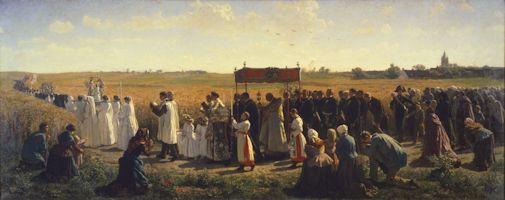
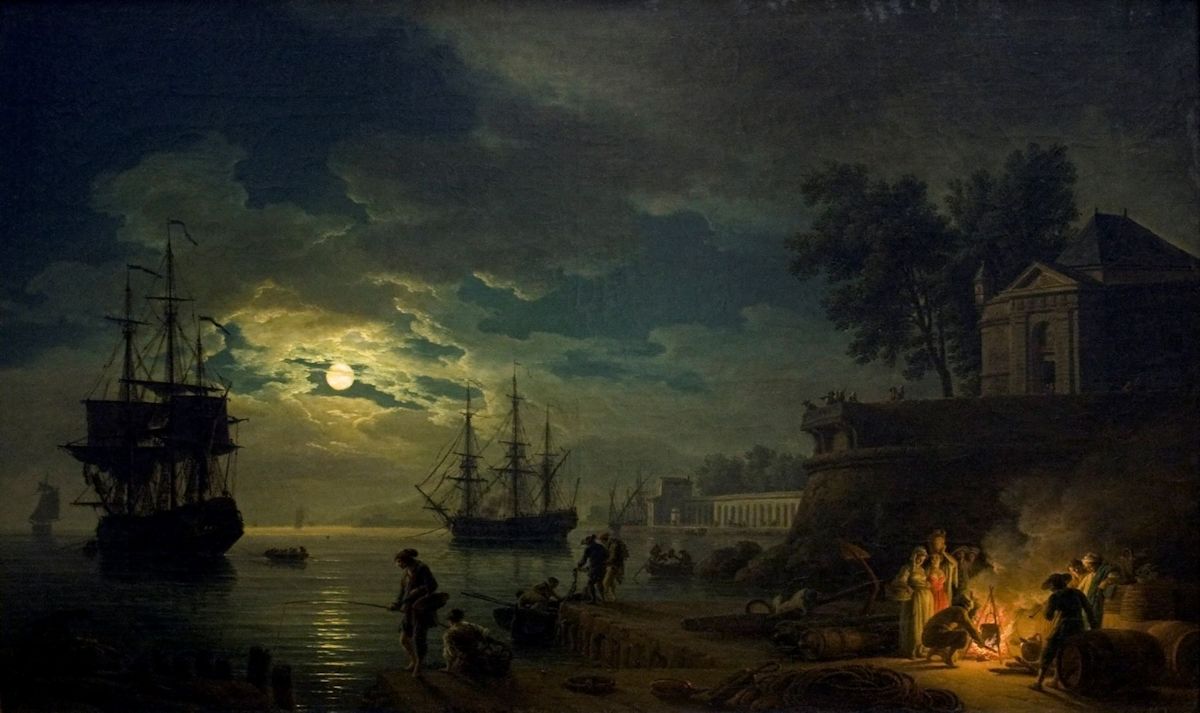
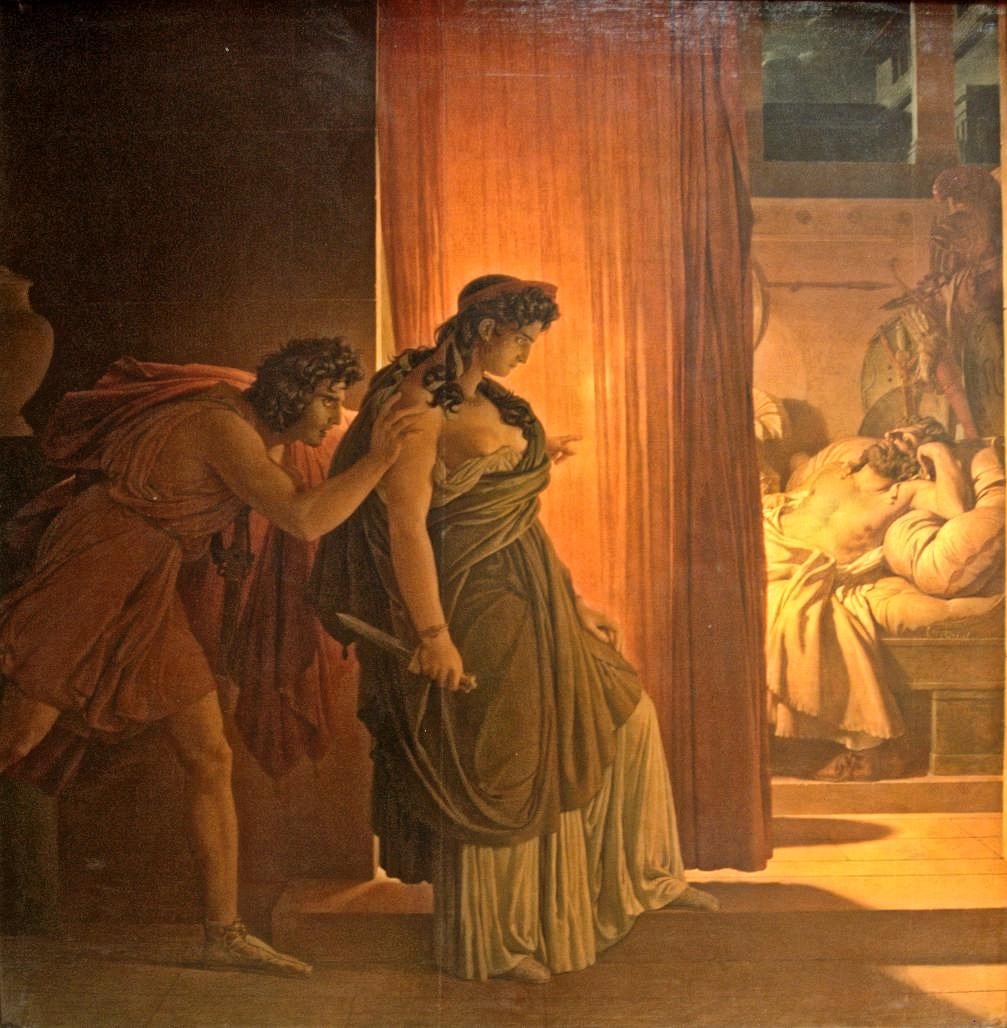
Please note that Gegoux stated, in his 1925 autobiography, that his "lamp light effect" was a copy of Pierre-Paul Prud’hon. Subsequent scholarship has determined that Gegoux must have actually copied Pierre-Narcisse Guerin's work Clytemnestra Hesitating before Stabbing the Sleeping Agamemnon Paris Salon 1817. This has been theorized because Prud’hon is not known to have executed a painting of Clytemnestra and Agamemnon. Further, the Guerin painting is the definitive work on the subject. Therefore it is believed to be the case that Gegoux was mistaken in his writing. Throughout his career Gegoux denied any formal training in the arts. As of this writing, no record has been found among the Louvre archives of a registration, which Gegoux would have been required to file for permission to study at the Louvre. Many parts of the records for 1881 are missing or non-existent. Nonetheless, during this three month period in the summer of 1881 he studied in Paris and Luxembourg, copying master paintings. As a result of this trip, Gegoux completed three masterpiece copies. Not surprisingly his subsequent work shows a flair for lighting effects; of the sky (Breton); of the moon (Vernet), and of lamps (Guerin).
Gegoux's copy of "The Blessing of Wheat at Artois" 1857, Jules Breton, is the only known example of Gegoux's Paris studies which stills exist today. The readers are reminded that Gegoux was but 30 years of age and in the prime of his life. Romance could hardly be surprising, but "no names are mentioned". |
||||||||||||
|
Portrait Subjects Eugene Spencer One remarkable painting from this period is that of Mrs. E. D. Spencer's son, of Port Leyden. A life-size pastel crayon portrait created at an expense of $130. The painting is a full figure, and is nearly six feet high outside of frame. The location of the original is not at present known, but it was likely one of the largest pastel works that Gegoux ever executed. No larger examples are known. E. D. Spencer, a druggist, was a native of Port Leyden. Spencer's name also appears as one of the leading merchants of Port Leyden. The 1880 Federal census, Port Leyden, shows Edward D. Spencer, age 31; Emma D., age 32; and Eugene C. D., age 12. The 1900 Federal census for Port Leyden shows Emma (Head), born Nov 1847; Edward (Husband), born Nov 1847; and Douglass (son), born Oct 1883. The portrait would therefore be of the first son Eugene Spencer. Also the portrait would likely have passed to Douglas when Emma died in Rochester May 15, 1910. Despite being buried and owning property in Lewis County, no probate action was filed there when Emma died. The Monroe County probate records have not been examined as of this writing. It is hoped that further research may yet reveal the fate of this painting. |
||||||||||||
|
Price List - 1880-1881 City Directory Watertown, New York .jpg)
|
||||||||||||
|
News of the Plans, Preparations, and Travel to Paris (December 4, 1880 to October 15, 1881)
|
||||||||||||
|
4.001) The Watertown Daily Times - December 4, 1880 - Saturday Prof. Gegoux is contemplating a visit to the city of Paris for the purpose of the further study of his art. |
||||||||||||
|
4.002) The Watertown Daily Times - December 6, 1880 - Monday Prof. Gegoux is contemplating a trip to Paris for a study of his art skills, which he has already so well acquired. |
||||||||||||
|
4.003) The Democrat, Lowville, Lewis County - December 29, 1880 Mrs. Wm. Boshart presented her husband with a fine life sized portrait on Christmas. The work was executed by Prof. Theo. Gegoux, of Watertown, and is said to be one of his best. |
||||||||||||
|
4.004) The Watertown Re-Union - December 30, 1880 Carthage Mr. Frank Brown, train dispatcher on the R. W. & O. R. R. and Prof. Theo. Gegoux of your city spent the Sabbath in town. |
||||||||||||
|
4.005) The Journal & Republican - Lowville- December 30, 1880 - Wednesday Theodore Gegoux has lately finished a life size pastel crayon portrait of Mrs. Wm. L. Boshart at an expense of $55. It is said to be a fine piece of work. It was a Christmas present to Mr. Boshart. |
||||||||||||
|
4.006) The Watertown Daily Times - January 8, 1881 - Saturday Fine Picture. An India ink portrait of the late Dr. Ellis is on exhibition at the drug store. It is from the studio of Theo Gegoux, Watertown, and is greatly admired by all who knew the doctor, und was a Christmas present to Mrs. Ellis - Clayton Independent |
||||||||||||
|
4.007) The Watertown Daily Times - January 19, 1881 - Wednesday About twenty couples arranged a surprise party for Miss Jane Mothersill last evening. It was a complete success and the occasion was a very happy one. During the evening Prof. Gegoux presented Miss Mothersill with a beautiful painting. |
||||||||||||
|
4.008) The Watertown Daily Times - February 15, 1881 - Tuesday A beautiful picture of a dog which graces Hanford & Waterman's window adds fresh laurels to Prof. Gegoux's well earned fame as an artist. |
||||||||||||
|
4.009) The Watertown Times - February 25, 1881 - Friday The French Fair. - A large number gathered at the hall last night, it being the closing evening of the fair given by the ladies of the French church. The prizes drawn were as follows: scarf, Theo. Gegoux; quilt Ella Phillips; carriage spread. J. D. Simons; book, Louise Vien; slippers. Byron J. Smith: bed quilt, Albert Dangel; white spread, Henry Martin; jewelry case. F. Momson; slippers, Miss Kittie Delan; bed quilt, Bridget Hennesy: white oleander, Mrs. A. Bodreau. |
||||||||||||
|
4.010) The Watertown Daily Times - April 8, 1881 - Friday Prof. Gegoux has added another laurel to his fair name and fame. The same may be seen in Hanford's window. The children represented are Sebastian Quencer's. |
||||||||||||
|
4.011) The Watertown Daily Times - April 12, 1881 - Tuesday Miss Pauline Haherer of Lowville , and Prof. Gegoux of Watertown, spent Sunday in Carthage. |
||||||||||||
|
4.012) The Watertown Daily Times - April 22, 1881 - Friday Prof. Gegoux is now painting a life size portrait of Mrs. E. D. Spencer's son, of Port Leyden, who died almost a year ago. The portrait is being executed in pastel at an expense of $130. (Note: The portrait was of Eugene C. D. Spencer, aged 12 years) |
||||||||||||
|
4.013) The Watertown Daily Times - April 27, 1881 - Wednesday Mrs. Annetta Flynn is having a life-size crayon portrait executed of her deceased daughter "Mollie." Gegoux is the artist. |
||||||||||||
|
4.014) The Democrat, Lowville, Lewis County - April 27, 1881 A PORTRAIT of the late son of J. E. Spencer, of Port Leyden, is being made by Prof. Gegoux, in pastel. Also ... down same column ... Mrs. E.D. Spencer, of Port Leydon, is having a life-size pastel crayon portrait painted of her deceased son at an expense of $130. T. Gegoux is the artist. Mrs. S. may feel confident of obtaining a speaking portrait. |
||||||||||||
|
4.015) The Journal & Republican - Lowville - April 28, 1881 - Thursday Prof. Gegoux will be in town on Saturday this week, to deliver some of his work, he will come on the evening train. |
||||||||||||
|
4.016) The Journal & Republican - Lowville - April 28, 1881 - Thursday Prof. Gegoux, of Watertown is executing a life-size pastel crayon portrait of Mrs. E. D. Spencer's son, of Port Leyden, at an expense of $130. The painting is a full figure, and is nearly six feet high outside of frame. (Note: The portrait was of Eugene C. D. Spencer, aged 12 years) |
||||||||||||
|
4.017) The Watertown Daily Times - April 28, 1881 - Thursday Mrs. A. E. Baron and Mrs. Van Namee are having some life size crayon portraits of their father and mother. Gegoux is the artist. |
||||||||||||
|
4.018) The Watertown Daily Times - May 5, 1881 - Thursday Mrs. Lyman A. Howard is having Prof. Gegoux crayon a portrait of her little daughter, Edith Daisy. |
||||||||||||
|
4.019) The Watertown Herald - May 6, 1881 - Friday A life size portrait of a young son of Mrs. Spencer, of Port Leydon painted by Prof. Gegoux of this city, can be seen in G. R. Hanford & Co.'s sales window. It is excellently painted. (Note: The portrait was of Eugene C. D. Spencer, aged 12 years) |
||||||||||||
|
4.020) The Watertown Daily Times - May 11, 1881 - Thursday Mrs. H. N. Holden of Antwerp is having a large crayon portrait executed of her late husband. Gegoux is the artist. |
||||||||||||
|
4.021) The Watertown Daily Times - May 12, 1881 - Thursday A Lifelike Portrait. There is on exhibition at Hanford's show window a fine work of art. It is a life-size pastel crayon portrait of Miss Libbie Kapfer of Carthage, the work of Prof. Gegoux. This is certainly one of the best pieces of coloring ever exhibited in our city. |
||||||||||||
|
4.022) The Watertown Daily Times - May 13, 1881 - Friday Prof. Gegoux's studio will be closed until Monday. He leaves today for Lowville and Port Leydon on business. |
||||||||||||
|
4.023) The Watertown Daily Times - May 16, 1881 - Monday Prof. Gegoux has returned to his studio from his trip through Lewis county. |
||||||||||||
|
4.024) The Watertown Daily Times - May 17, 1881 - Tuesday We have often wondered what the attraction was that drew Artist Gegoux to Carthage about every Saturday evening to remain over Sunday, but now we have discovered the "lode stone," and cheerfully admit that its attractiveness will draw a large person right towards it. In fact, a number of our town boys have felt its influence, but being of a negative disposition, they soon found a repulsion, but our friend Gegoux "is just the stuff." |
||||||||||||
|
4.025) The Watertown Daily Times - May 18, 1881 - Wednesday Prof. Gegoux is now finishing a life-size crayon portrait of Mrs. J. M. Tilden. The portrait is for a present to Mr. Tilden. |
||||||||||||
|
4.026) The Watertown Daily Times - May 26, 1881 - Wednesday The Antwerp Gazette says: Mrs. H. Holden, of this town, is having painted a life-size crayon portrait of her late husband. Prof. Theo. Gegoux, of Watertown, is the artist. |
||||||||||||
|
4.027) The Watertown Daily Times, May 27, 1881 - Friday Mrs. C. A. Nott, of Syracuse, is having a crayon portrait painted of her deceased sister. Theo. Gegoux is the artist. |
||||||||||||
|
4.028) The Daily Courier - Syracuse - May 31, 1881 - Tuesday The Watertown Times says: Mrs. O. A. Nott, of Syracuse, is having a crayon portrait painted of her deceased sister. Prof. Gegoux is the artist. |
||||||||||||
|
4.029) The Watertown Daily Times - June 16, 1881 - Thursday Prof. Gegoux will sail for France early in July. He purchased his tickets from Baker yesterday. |
||||||||||||
|
4.030) The Watertown Re-Union - June 22, 1881 - Wednesday Prof. Gegoux, the artist, contemplates a visit to France in July. |
||||||||||||
|
4.031) The Watertown Daily Times - June 30, 1881 - Thursday Prof. Gegoux will leave Watertown on his extended trip across the ocean on Tuesday next (July 5, 1881). |
||||||||||||
|
4.032) The Watertown Daily Times - July 5, 1881 - Tuesday Theodore Gegoux Theo. Gegoux leaves today for New York, from which place he will sail tomorrow for Paris, where he will spend a few weeks. Mr. Gegoux has met with remarkable success since he moved to our city, and all who have examined his work, know how well it is deserved. Mr. Gegoux is what might be called a natural born artist. He has had no training whatever. He is self taught in his profession. Over five years ago, he learned the art of photography, and soon after turned his attention to portrait painting. He settled in Carthage, but his business increasing he moved to this city a few years ago. Since that time his success has been most remarkable, he being compelled to work night and day at his profession. He receives orders for portrait paintings from all over the state, and never fails to give entire satisfaction. His success is due entirely to his genius and untiring energy, and no one certainly merits it more. While in Paris he will study portrait painting, principally from observation. He will also receive a much needed rest, and will return invigorated in body and better than ever to satisfactorily carry on his profession. The Times wishes him continued prosperity, a pleasant voyage, and a safe return to his friends in Watertown. |
||||||||||||
|
4.033) The Democrat, Lowville, Lewis County - July 6, 1881 Prof. Theo. Gegoux has left Watertown for Europe, where he will remain a few weeks. |
||||||||||||
|
4.034) The Journal & Republican - Lowville - July 7, 1881 - Thursday Prof. Theodore Gegoux of Watertown, formerly of Lowville, departed for Paris on Tuesday and will be absent for several weeks. |
||||||||||||
|
4.035) The Watertown Daily Times - July 19, 1881 - Saturday "Reade, the tailor" whose cheerful likeness, admirably drawn by Prof. Gegoux, may be seen at the entrance of the American arcade, and who has an office or business room at No. 11, in the same building, is carrying on business on a plan wholly new to most people outside of the large cities. Garments are made entirely from sample. Call on him and he will explain how the thing is done. He keeps no large stocks on which he is paying or losing interest, has no remnants, and his rent is merely nominal. So he proposes to do work at the lowest figures and in the best manner. He has been open about one month, with the most satisfactory results. He invites those who want anything in the line of wearing apparel to give him a trial, and the Times can see no reason why the invitation should not be accepted. |
||||||||||||
|
4.036) The Watertown Daily Times, August 2, 1881 - Tuesday A private letter received in this place states that Prof. Gegoux arrived in France in due time and was at present enjoying himself as well as could be expected. |
||||||||||||
|
4.037) The Watertown Daily Times, September 13, 1881 - Tuesday The Times is in receipt of a letter from that genial and talented artist, Theodore Gegoux, who is now in Paris copying the old masters. He reports that he is hard at work and will bring several paintings of his own work home with him. He expects to return to Watertown about the first of October, prepared to do even better work than ever before. He will be heartily welcomed by his many friends. |
||||||||||||
|
4.038) The Watertown Daily Times, September 30, 1881 - Friday The crayon portrait of T. A. Edison, the electrician, on exhibition at Sterling & Mosher - Arcade window, is the work of Prof. Gegoux, and is valued at thirty dollars, is now offered at half-price by the family who drew it at the French fair and are in need of the cash. |
||||||||||||
|
4.039) The Watertown Daily Times, October 1, 1881 - Saturday The large crayon portrait of Edison, the electrician, at Sterling & Mosher's store, which we mentioned yesterday as being the property of a family who were greatly in need of money, is now being purchased by subscription of our prominent business men and will be presented to the Y. M. C. A. Anyone may aid in this good movement by subscribing fifty cents or one dollar at the above mentioned store. |
||||||||||||
|
4.040) The Watertown Daily Times, October 12, 1881 - Wednesday Prof. Gegoux has returned from a pleasant trip to Paris and other French cities, and is being warmly greeted by old friends and associates. He will reopen his studio in the American Arcade on Monday next and is better prepared than ever to fill orders. |
||||||||||||
|
4.041) The Democrat, Lowville, Lewis County - October 12, 1881 Prof. Theo. Gegoux, the artist, has returned from his European trip. |
||||||||||||
|
4.042) The Jefferson County Journal, Adams, N. Y. - October 19, 1881 Returned Home - The artist, Prof. Gegoux, after several weeks visit to Paris, the city of art, and other cities of note on the continent of Europe, returned home last week Wednesday (Oct 6, 1881), has reopened his studio at his old place of business, the American Arcade (22, 23, & 24), where he will be pleased to wait upon his patrons as formerly who may favor him to call. The best advertising medium that the Professor puts before the public is work which alone sustains his reputation as an artist. Mr. Gegoux's trip abroad will better enable him to accomplish his desired object - the carrying of the work of art to a higher state of perfection of which he is fast becoming one of its able masters. |
||||||||||||
|
4.043) The Watertown Re-Union, October 12, 1881 - Wednesday Prof. Gegoux has returned from France. |
||||||||||||